Make the next check visible
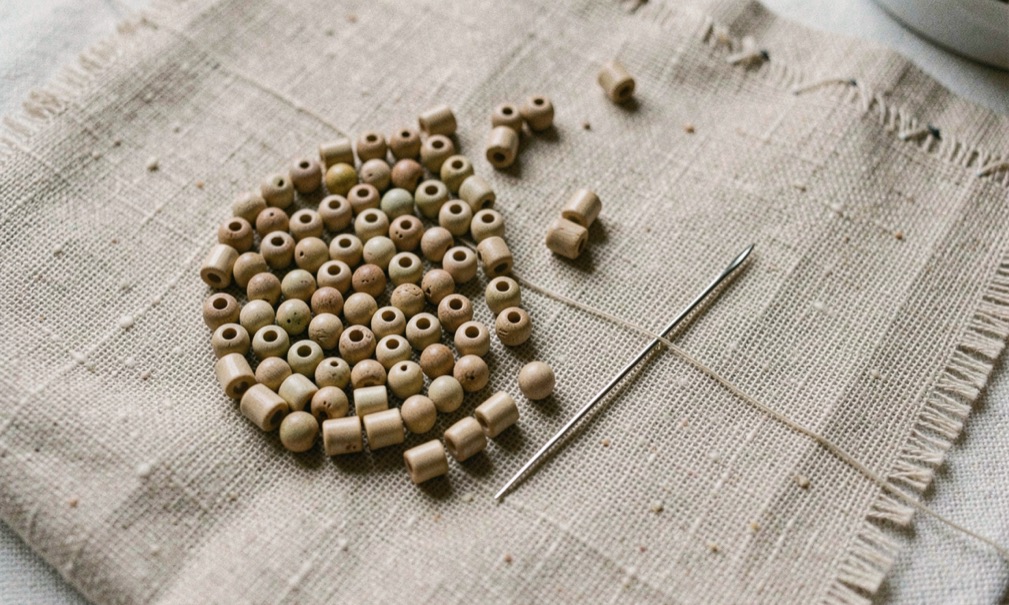
A counted weave depends on diameter, height, hole position, edge profile, finish, and thread. A cylinder can create a straighter wall than a round bead. A coated surface can change friction. A short test section makes those consequences visible before a long repeat turns them into rework.
MIYUKI and TOHO publish their own vocabularies and source lanes. A familiar 11/0 label is a starting point for the comparison, not proof of a drop-in swap. Keep the family and the lot in the same note as the stitch and thread.
Bench checklist
Before you commit
- Name the exact family or operation behind seed bead sizes.
- Keep the source and retrieval date beside any precise claim.
- Identify the dimension, finish, or junction that limits the project.
- Test the intended materials before committing to the full design.
Keep the caveat
What this page leaves visible
A familiar label can organize a question, but it cannot prove that two materials are interchangeable. Keep the publisher's caveat attached and leave unknowns visible.
Evidence pack
Sources close to the decision
- MIYUKI Co., Ltd.: Size and Shape of Seed BeadsMIYUKI seed bead family names and approximate millimeter values.The publisher describes the millimeter figures as approximate and keeps the product families separate. Checked August 24, 2026.
- TOHO BEADS: Glass BeadsTOHO shape names, hole-profile descriptions, and the stated distinction between round, cylinder, cut, bugle, and specialty forms.The descriptions are manufacturer information; a design still needs a short fit test before substitution. Checked August 24, 2026.
- U.S. Federal Trade Commission: Jewelry GuidesWhy material type, treatment, size, quality, durability, origin, and other product representations should be truthful and clear.This is general U.S. guidance, not personalized legal advice or a substitute for the current regulation text. Checked August 24, 2026.