Make the next check visible
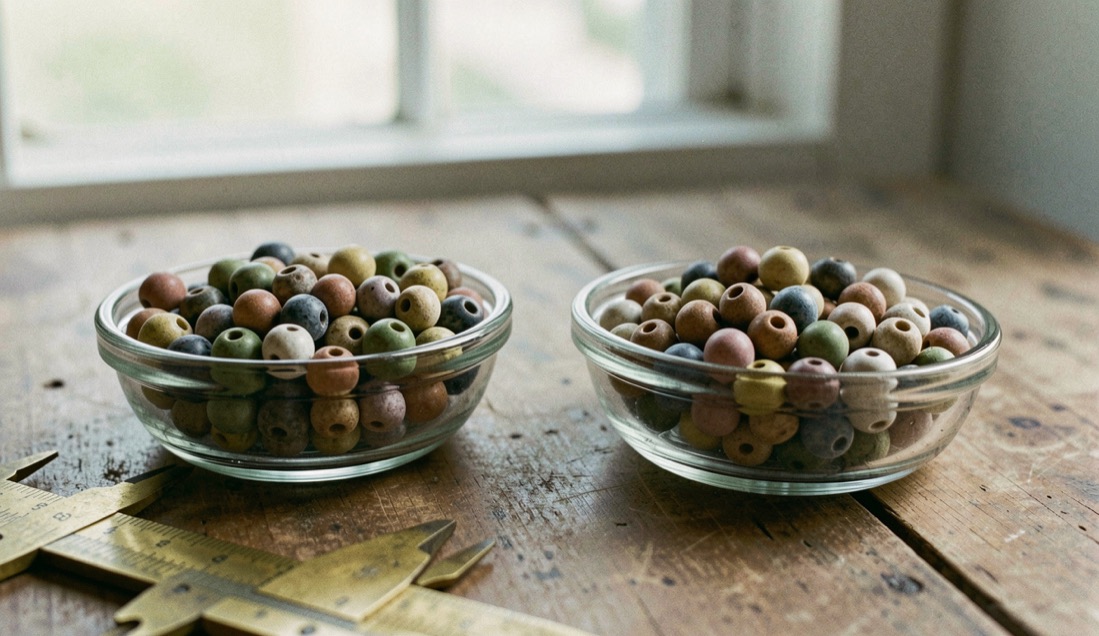
A useful guide to bead dye lot variation starts by asking what the label, shape, material, or tool changes in the project. The bench keeps treat a new lot as a new input and compare a short sample before mixing it into counted work. This turns a broad subject into a choice that can be checked with the materials in hand.
Use a short sample to see the consequence before committing to a long repeat. Record the source, product family, date, and observed result separately so a personal test does not become a universal promise.
Bench checklist
Before you commit
- Name the exact family or operation behind bead dye lot variation.
- Keep the source and retrieval date beside any precise claim.
- Identify the dimension, finish, or junction that limits the project.
- Test the intended materials before committing to the full design.
Keep the caveat
What this page leaves visible
A familiar label can organize a question, but it cannot prove that two materials are interchangeable. Keep the publisher's caveat attached and leave unknowns visible.
Evidence pack
Sources close to the decision
- MIYUKI Co., Ltd.: Seed bead count and weight referenceA source lane for comparing approximate count and weight information.Counts can vary with manufacturing lots, shapes, and finishes; this is not a universal conversion table. Checked August 24, 2026.
- TOHO BEADS: Beads Per Kg ChartA separate source lane for approximate weight and count information by TOHO family.Keep the TOHO lane separate from MIYUKI or PRECIOSA values and retain the source's approximate status. Checked August 24, 2026.
- MIYUKI Co., Ltd.: Size and Shape of Seed BeadsMIYUKI seed bead family names and approximate millimeter values.The publisher describes the millimeter figures as approximate and keeps the product families separate. Checked August 24, 2026.